 Reviews


 Proudly American


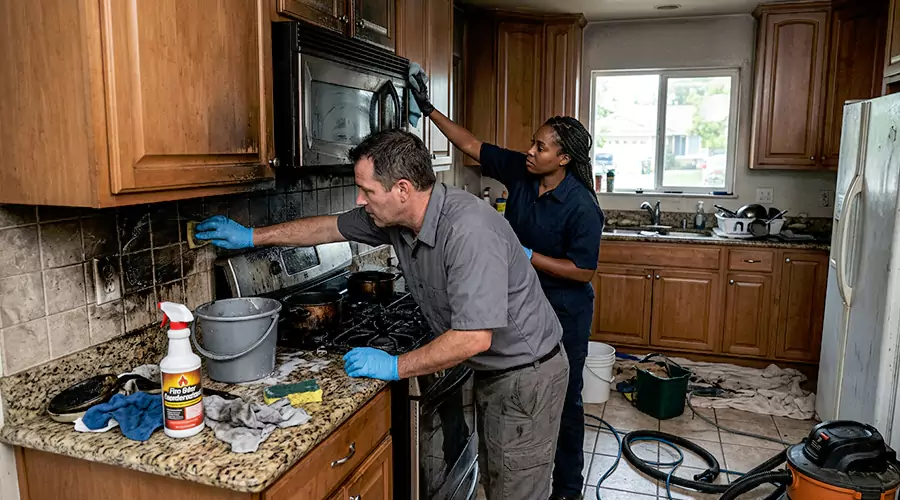
Kitchen fire cleanup should begin only after the area is safe, with loose soot removed before wet washing starts. Burned food, grease residue, smoke odor, and firefighting water can affect surfaces far beyond the stove. Fire and water clean up should move from damage assessment to soot removal before washing and odor control.
What Should You Do First After a Kitchen Fire?
The first step is to make sure the fire is fully out and the room is safe to enter. Do not handle damaged electrical appliances until they have cooled and their condition is known. Photograph visible damage before throwing away items that may be part of an insurance claim.
Start with these steps:
- Keep people away from the damaged area.
- Confirm that the kitchen is safe to enter.
- Photograph soot and burned materials.
- Remove standing water when it is safe.
- Separate clean items from contaminated belongings.
- Avoid turning on appliances that were exposed to heat.
How Do You Remove Soot From Kitchen Surfaces?
Loose soot should be removed before any wet cleaner is applied. Fine residue can smear when a damp cloth is used too early. A vacuum with suitable fine-particle filtration can collect loose soot while the nozzle stays slightly above delicate surfaces. After dry removal, use a compatible cleaner on washable surfaces. Kitchen smoke can contain greasy residue, so some areas may need repeated cleaning.
Work in this order:
- Ceilings
- Upper walls
- Cabinet exteriors
- Counters
- Lower surfaces
- Floors
How Should Greasy Smoke Residue Be Cleaned?
Greasy smoke residue behaves differently from light dry soot. Cooking oils can create sticky deposits that cling to cabinets or walls. Dry removal should still come first, followed by a detergent that is safe for the surface. Test any cleaner on a hidden section of painted cabinets or finished wood. Avoid strong scrubbing that can remove paint or dull a finish. Kitchen fire smoke odor removal also depends on removing this oily film. Fragrance alone will not solve odor that remains attached to surfaces.
What Kitchen Materials Can Usually Be Cleaned?
Hard nonporous surfaces are generally easier to clean than absorbent materials. Glass or tile can often be washed after loose residue is removed. Porous finishes may hold odor below the visible surface.
| Material | Typical Response |
|---|---|
| Glass | Clean after soot removal |
| Tile | Wash and rinse |
| Sealed counters | Clean with compatible detergent |
| Painted cabinets | Test before wider cleaning |
| Finished wood | Use a finish-safe method |
| Upholstered seating | Evaluate odor penetration |
| Heavily burned material | Replace rather than clean |
What Should You Do With Food After a Kitchen Fire?
Food exposed to smoke, heat, or firefighting chemicals should be treated cautiously. Open packages are easy to contaminate. Heat can also damage sealed containers even when the outside looks normal.
Discard food when:
- Packaging is open.
- Containers are scorched.
- Smoke entered the package.
- Firefighting chemicals contacted the item.
- Refrigerated food was left warm for too long.
- The safety of the package is uncertain.
How Do You Remove Smoke Odor After the Kitchen Is Clean?
Smoke odor should be addressed after soot and greasy residue have been removed. Washable fabrics such as curtains may need laundering. Cabinet interiors should also be checked because smoke can collect inside enclosed spaces.
Look for odor sources in:
- Curtains
- Cabinet interiors
- Upholstered chairs
- Pantry shelving
- HVAC filters
- Porous wall materials
Close the cleaned kitchen for several hours after ventilation. If the smoke smell becomes strong again, contamination may remain in a material that was missed.
What About Water Used to Put Out the Fire?
Firefighting water can create a second damage problem. Water can soak lower cabinets or flooring even when those materials were not burned. Wet drywall can also hold moisture behind the visible surface. Remove standing water when electrical conditions are safe. Dry exposed materials before cabinets or flooring are repaired.
What Warning Signs Mean the Damage Is More Serious?
Some conditions show that kitchen fire damage extends beyond routine household cleaning. Heat can weaken cabinets while smoke can enter nearby rooms or ventilation pathways.
Watch for these signs:
- Cabinets are charred or warped.
- Drywall feels soft.
- Smoke odor returns after cleaning.
- Soot appears around air registers.
- Electrical outlets show heat damage.
- Flooring has lifted after water exposure.
- Several rooms contain residue.
- Ceiling paint begins peeling.
- Insulation smells smoky.
- Appliances show melted components.
What Can You Safely Check Yourself?
A white-cloth test can help determine whether accessible hard surfaces are still transferring soot. Let the cleaned surface dry first, then make one light wipe with a fresh white cloth. Also inspect cabinet interiors with a clean cloth because smoke can settle where exterior surfaces look normal.
When Should You Call a Professional?
Professional assessment is appropriate when the fire damaged cabinets or electrical components. Help is also useful when heavy smoke odor returns after repeated cleaning or when firefighting water entered wall cavities.
Consider professional help when:
- Electrical wiring may be damaged.
- Cabinets are structurally affected.
- Soot covers large areas.
- Smoke entered HVAC components.
- Firefighting water saturated flooring.
- Drywall is charred or soft.
- Odor persists after source cleaning.
- The extent of the damage is unclear.
How Can You Prevent Another Kitchen Fire?
Useful habits can reduce common cooking fire risks:
- Keep combustible items away from burners.
- Clean grease buildup regularly.
- Keep appliance cords in good condition.
- Avoid leaving frying food unattended.
- Keep a suitable fire extinguisher accessible.
- Check smoke alarms on schedule.
Grease should never be extinguished by pouring water on it. Water can cause burning oil to spread rapidly.
Conclusion
Cleaning up after a kitchen fire requires more than washing visible black marks. Remove loose soot first, then clean greasy residue from compatible surfaces before addressing lingering odor. Check nearby cabinets and flooring because smoke or firefighting water can spread beyond the burn area. If heat damaged electrical systems or structural materials, professional assessment can help determine what should be cleaned and what should be replaced.
Frequently Asked Questions
Can you use regular kitchen cleaner on fire soot?
Only after loose soot has been removed and the product is safe for the surface. Test it first on painted or finished materials.
Should food be kept after a kitchen fire?
Food exposed to smoke, heat, or firefighting chemicals may need to be discarded. Damaged packaging increases concern.
Can smoky cabinets be saved?
Often, if they remain structurally sound and the finish tolerates cleaning. Charred or warped cabinets may need replacement.
Why does the kitchen still smell after cleaning?
Greasy residue may remain inside cabinets or porous materials even after visible soot is gone.
Should appliances be used after a kitchen fire?
Not until their condition is known. Heat or water exposure can damage wiring and internal components.
Can smoke from a kitchen fire affect other rooms?
Yes. Smoke can travel through open doorways or ventilation pathways and leave residue outside the kitchen.